EN
EN


Home > News > Industry News
1. What Is a Threaded Rod?
A threaded rod is a long, cylindrical fastener with continuous threads along its entire length. Typically used in combination with nuts and washers, it provides reliable connection and fixation between two or more components. The defining feature of a threaded rod is its ability to be cut to any desired length on site, offering exceptional flexibility across a broad range of industrial applications. Key international standards include DIN 976, DIN 975, and ISO 898-1, with corresponding GB/T standards used in the Chinese market.
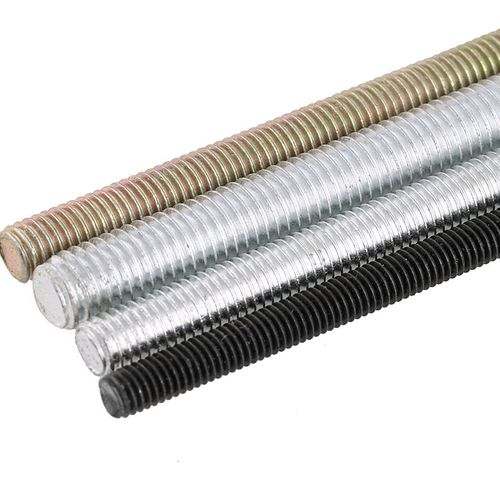
Threaded Rods in Various Materials and Surface Finishes
2. Classification of Threaded Rods
2.1 By Material
Material selection directly determines a threaded rod's performance and suitable application. Common materials include: Carbon Steel (Grade 4.8 — general purpose; Grade 8.8 — medium strength; Grade 10.9 — high-strength structural connections; Grade 12.9 — ultra-high strength); Stainless Steel (A2-70, A4-70, A4-80 — with excellent corrosion resistance for marine, chemical, and food-grade environments); and Alloy Steel (e.g., B7, B16 — designed for high-temperature and high-pressure service conditions).
2.2 By Surface Finish
Surface treatment affects both corrosion resistance and appearance. Common finishes include: Zinc Plated (electro-galvanized, suitable for indoor use); Hot-Dip Galvanized (HDG, for outdoor and heavy-corrosion environments); Dacromet (superior corrosion resistance with no hydrogen embrittlement risk); Black Oxide (decorative, with light oil protection); and Plain/Bare Finish (stainless steel in its natural state, ideal for food, medical, and hygiene-critical applications).
2.3 By Thread Standard
The global market predominantly uses ISO metric threads with a 60° profile angle, available in standard (coarse) pitch and fine pitch variants. Common metric sizes range from M6, M8, M10, M12, M16, M20, M24 to M30 and beyond, typically supplied in standard lengths of 1 meter or 3 meters.
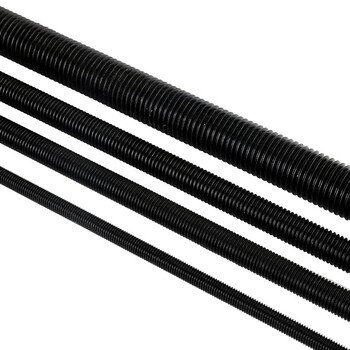
Threaded Rods in Various Metric Sizes
3. Key Specifications and Technical Parameters
The following table provides reference specifications for commonly used metric threaded rods:
|
Specification |
M6 |
M8 |
M10 |
M12 |
M16 |
|
Pitch (mm) |
1.0 |
1.25 |
1.5 |
1.75 |
2.0 |
|
Grade 4.8 Tensile Strength |
420 MPa |
420 MPa |
420 MPa |
420 MPa |
420 MPa |
|
Grade 8.8 Tensile Strength |
800 MPa |
800 MPa |
800 MPa |
800 MPa |
800 MPa |
|
Grade 10.9 Tensile Strength |
1000 MPa |
1000 MPa |
1000 MPa |
1000 MPa |
1000 MPa |
|
Standard Lengths |
1m / 3m |
1m / 3m |
1m / 3m |
1m / 3m |
1m / 3m |
Common Metric Threaded Rod Specifications
4. Installation and Usage
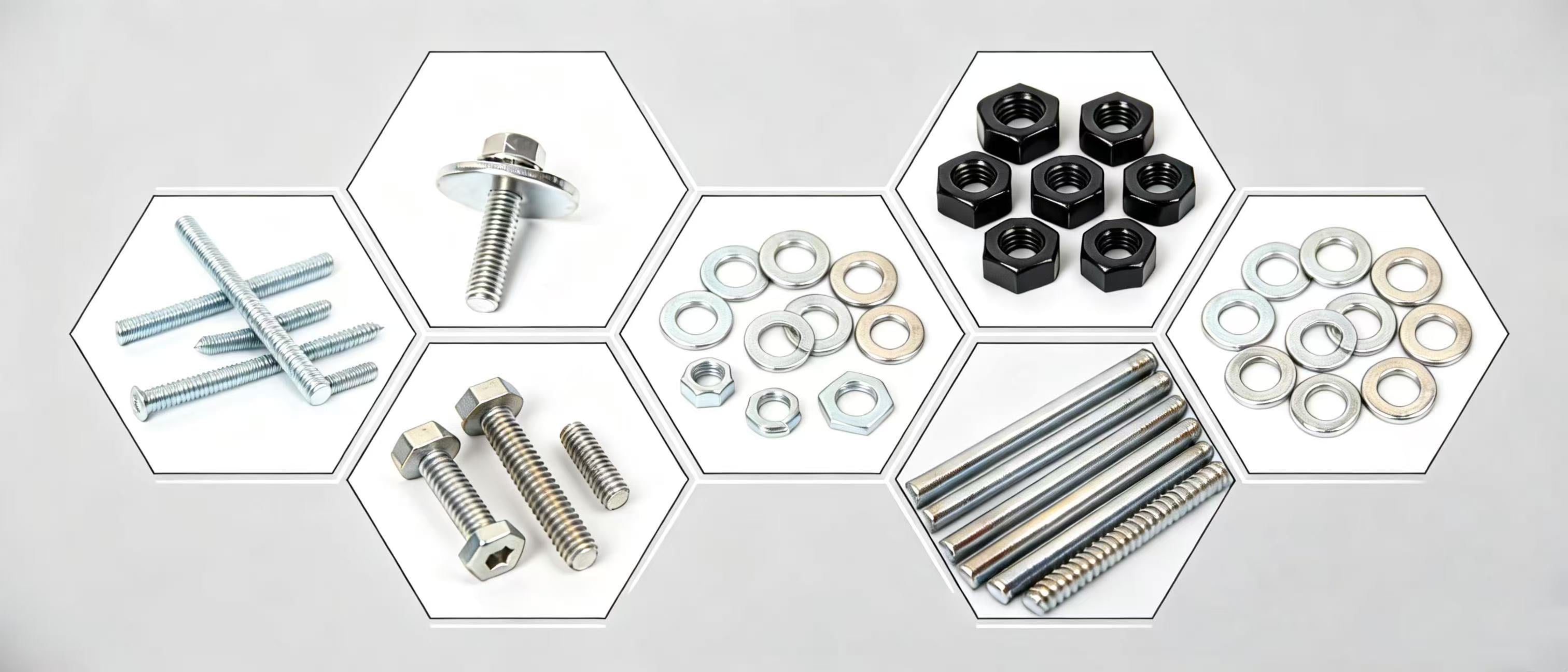
Threaded rods are typically installed using a double-nut plus double-washer configuration: the rod passes through the pre-drilled holes of the components, with washers and nuts tightened on both ends. To achieve the rated load capacity, the nut must engage at least six full threads. In vibration-prone environments or critical applications, spring washers, prevailing torque lock nuts, or thread-locking adhesives are recommended to prevent loosening. Correct tightening torque, referenced against the applicable strength grade standard, is equally essential for joint integrity.
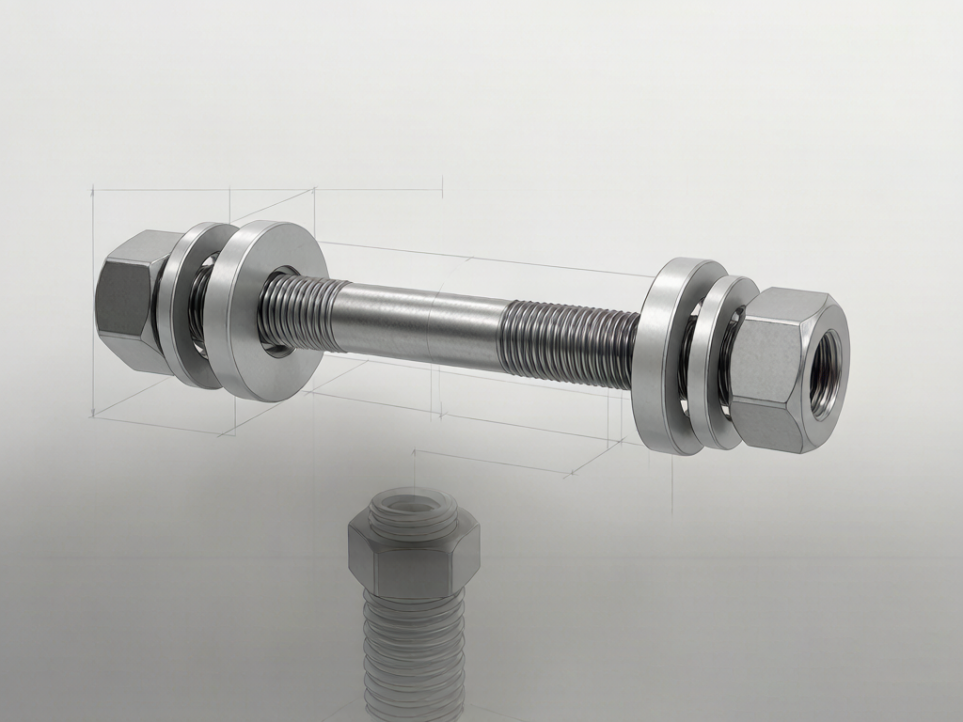
Threaded Rod Assembly with Nuts and Washers
5. Selection Guide: How to Choose the Right Threaded Rod
Selecting the correct threaded rod requires evaluating the following factors: ① Service Environment — Indoor or outdoor? Exposure to corrosive media? High temperatures? This determines the appropriate material and surface finish. ② Load Requirements — Calculate the design load and select the corresponding strength grade (Grade 4.8 for general use, Grade 8.8 and above for structural connections). ③ Dimensions — Verify that the diameter, thread pitch, and length conform to the design drawings. ④ Standards Compliance — Check for customer-specific standard requirements (DIN, ISO, GB, etc.). ⑤ Certification Needs — Automotive applications require IATF 16949 certification; construction components may need CE marking; and other sectors may mandate third-party inspection reports.
6. Quality Assurance and Certification
As an IATF 16949 and ISO 45001 certified supplier, Pyramid Hardware Fasteners exercises rigorous control over every stage of threaded rod production. All products undergo material certification, dimensional inspection, tensile testing, hardness testing, and surface quality checks to ensure batch-to-batch compliance with international standards. We provide full mill test certificates and Certificates of Conformity (COC), with third-party inspection reports available upon customer request.
 Hot News
2026-09-08
2026-07-10
2026-07-03
2026-06-30
2026-02-26
2026-01-20
Copyright © Pyramid Hardware Fasteners Co., Ltd. All Rights Reserved — Privacy Policy